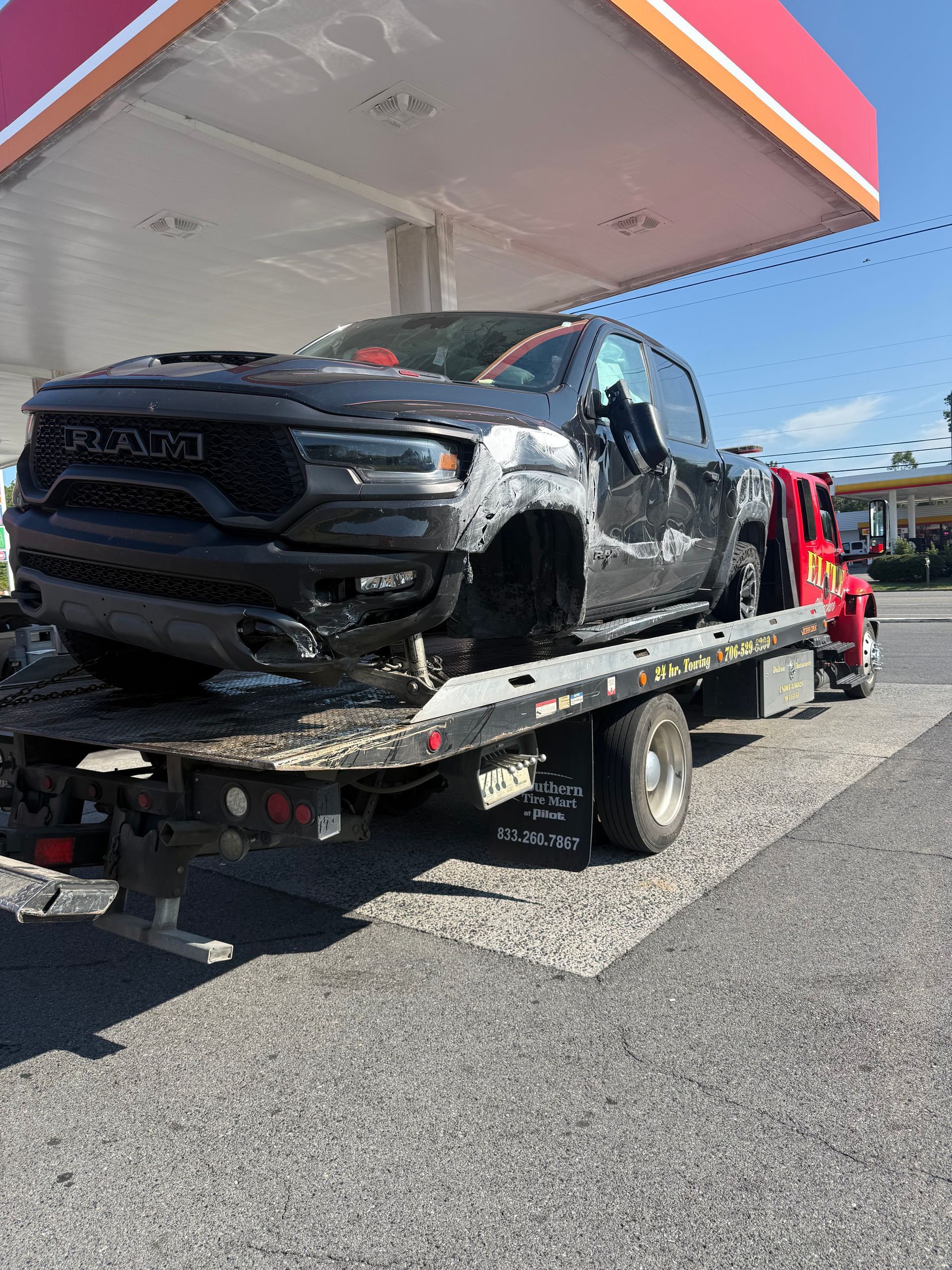
Damaged Vehicles Removed From the Scene
Accident recovery in Dalton for disabled or damaged vehicles that need safe removal following a collision
What changes after an accident recovery is completed is straightforward to describe: the disabled vehicle is no longer at the scene, the road or travel lane is clear, and the vehicle has been transported to a destination where it can be assessed for damage or repaired. Elite Wrecker & Recovery Inc provides that service for collision-involved vehicles across Dalton, Chatsworth, and surrounding areas—handling removal from the incident location and transport to a body shop, storage facility, or other designated destination chosen by the vehicle owner. Drivers dealing with a fresh collision rarely need to manage logistics alone when they know who to call.
Accident recovery involves more than attaching a hook and pulling a vehicle onto a bed. A collision-damaged vehicle may have compromised steering, suspension, or drivetrain components that affect how it can be safely moved—rolling a vehicle with a bent control arm onto a standard wheel-lift risks dragging components along the pavement and causing secondary damage. The technician assesses what the vehicle can and cannot tolerate before selecting the loading method, which is why flatbed transport is often the safer choice for vehicles with front or rear structural damage.
Call to report the location of the disabled vehicle so a recovery unit can be dispatched to the scene promptly.
What Proper Accident Recovery Requires
The recovery process at a collision scene involves coordinating the vehicle's removal in a sequence that accounts for its position, the surrounding traffic conditions, and the physical state of the vehicle itself. Vehicles that came to rest at an angle, against a guardrail, or in a ditch require repositioning before they can be loaded—that step uses the same controlled cable work involved in a winchout before transport even begins. High-traffic corridors on roads throughout the Dalton area present their own considerations, since a recovery that takes longer than necessary in a live travel lane creates additional hazard for everyone at the scene.
Once the vehicle is loaded and secured, you will be able to direct transport to the destination of your choice—a repair facility, a dealership, or a storage yard where the vehicle can sit while insurance documentation is handled. The vehicle arrives at its destination on the transport bed rather than being dragged or towed in a way that worsens existing damage. That matters particularly for vehicles with disabled brakes or steering, where towing from a tow bar rather than flatbed would create an unsafe tow configuration.
Accident recovery service focuses on removing the vehicle from the incident location and delivering it intact to the chosen destination—it does not include mechanical repairs, damage documentation, or coordination with insurers on the driver's behalf. Drivers who need assistance identifying a repair facility or storage option can ask at the time of the call, and the dispatcher can provide general guidance based on the situation.
Answers to Frequent Accident Recovery Questions
After a collision, drivers often have questions about logistics, vehicle handling, and what the recovery process involves at the scene.
How does the technician decide whether to use a flatbed or a wheel-lift for accident recovery?
The decision is based on the vehicle's damage profile—if front or rear suspension, steering, or drivetrain components are compromised, flatbed loading keeps all four wheels off the ground and prevents secondary damage during transport.
What should I tell the dispatcher when I call for accident recovery?
Provide your exact location or the nearest intersection, a description of the vehicle's position and visible damage, and your intended destination for the vehicle—this allows the right equipment to be dispatched from the start.
Why does vehicle position at the scene affect how long recovery takes?
A vehicle resting against a barrier or at an angle to the road requires rigging and repositioning before it can be loaded, which takes additional time compared to a vehicle that came to rest upright and accessible on the shoulder.
How does Elite Wrecker & Recovery Inc handle transport destination decisions?
The vehicle owner or their authorized representative directs where the vehicle is transported—to a repair shop, dealership service center, or storage facility based on whatever is most practical for the owner's situation at that time.
When should I call for accident recovery versus waiting for a tow arranged through insurance?
Calling directly for recovery service gets a unit moving to the scene immediately, which matters when the vehicle is blocking traffic or in a hazardous position—insurance coordination for reimbursement can follow after the vehicle is removed safely.
Elite Wrecker & Recovery Inc handles collision scene removals on local roads, highways, and travel routes throughout the Dalton and Chatsworth service area. Call (706) 529-8300 to report the location and get a recovery unit dispatched to your situation.